THE DRAWER
Millions of items waiting
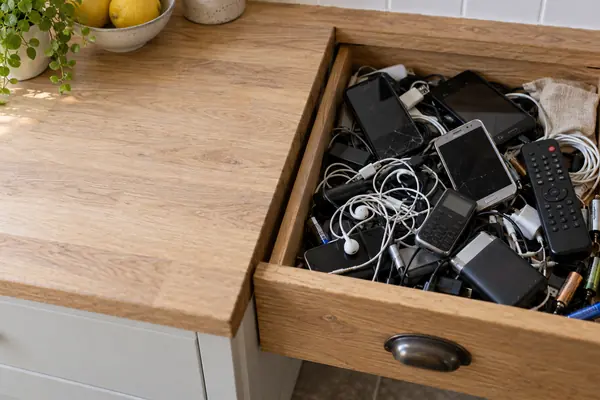
Defra estimated in 2023 that UK homes hoard 527 million unwanted electrical items containing materials such as gold, silver and platinum.
See the numbers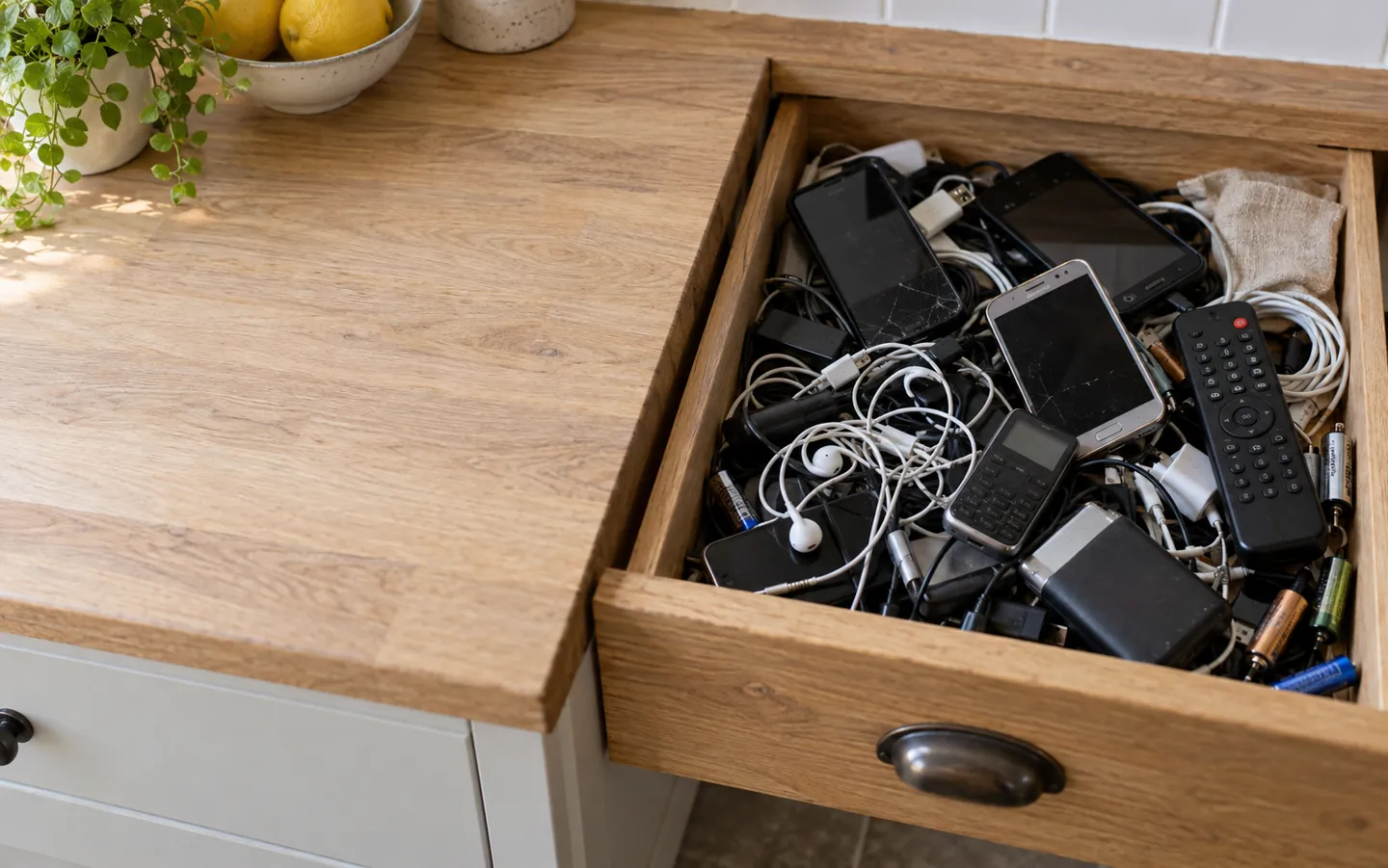
 doodlegadget
WHAT UK GUIDANCE SAYS
NOT IN THE BIN look for the symbol
That box of old chargers and phones is worth recycling.
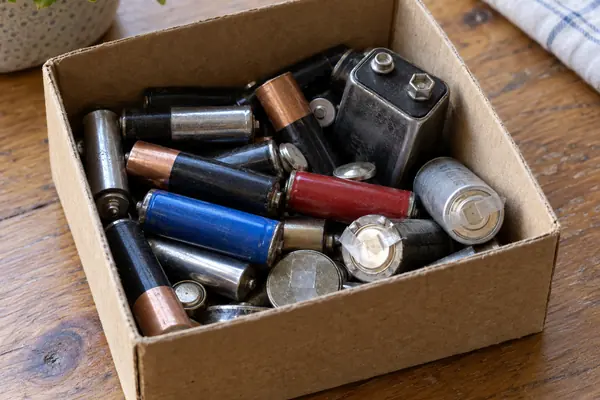
Electricals and batteries carry a crossed-out wheelie bin symbol: they should not go in household rubbish. Shops that sell electricals and batteries have duties to take old ones back, often for free.
Updated
Where can it go?THE SHORT ANSWER
Most gadgets can go back to a shop or a recycling centre.
Batteries have their own drop-off points.
THE DRAWER
Defra estimated in 2023 that UK homes hoard 527 million unwanted electrical items containing materials such as gold, silver and platinum.
See the numbersBATTERIES
Most batteries can go to a supermarket or any shop selling over 32 kg of batteries a year. Tape the terminals of lithium batteries first to cut the fire risk.
Where can it go?SWAP
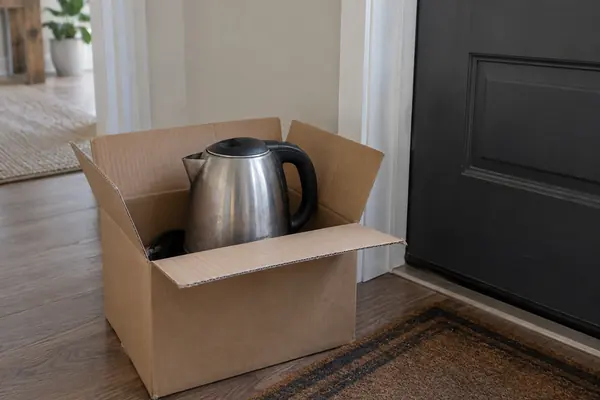
When you buy a new electrical item, the retailer must take the old one back free, like for like, whether you buy online or in store.
Your optionsA QUICK ITEM CHECK
Pick an item to see what GOV.UK guidance says. The bar shows how strongly the rules steer it away from your household bin.
Based on OPSS consumer guidance and GOV.UK guidance on retailers' take-back duties. Your council's recycling centre takes electricals too.
TWO NUMBERS WORTH KNOWING
Defra estimates published in December 2023
alongside proposals to reform electrical waste rules.
155,000 tonnes
Small electricals wrongly thrown in the bin each year
Items such as cables, toasters, kettles and power tools, estimated to end up in household bins every year.
BINNED · DEFRA 2023
527 million
Unwanted electrical items kept in UK homes
Containing valuable materials such as gold, silver and platinum that could be recovered.
HOARDED · DEFRA 2023
In December 2024 the government announced that online marketplaces and vape producers will pay their share of the cost of recycling waste electricals.
FOUR PLACES TO TAKE OLD GADGETS
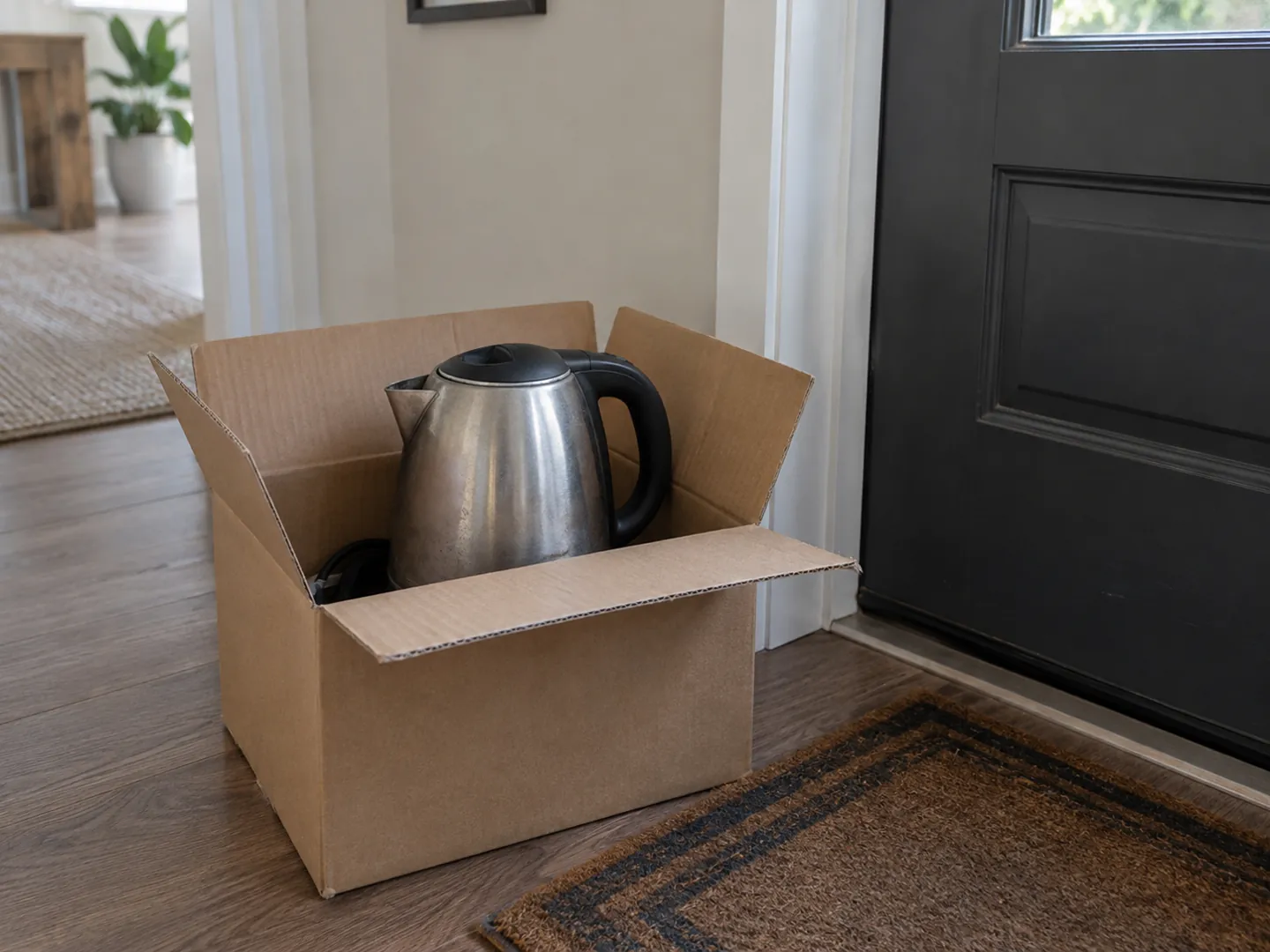
These options come from GOV.UK guidance for consumers and retailers.
Retailers must offer free like-for-like take back, or belong to a scheme that provides it. They must tell you which service they offer.
Items under 25 cm can go to stores with over 400 square metres of electrical sales space, free, without buying anything.
Shops selling over 32 kg of batteries a year should have a collection point for portable batteries.
Household waste recycling centres take waste electricals and keep them separate from other rubbish.
WHY IT MATTERS
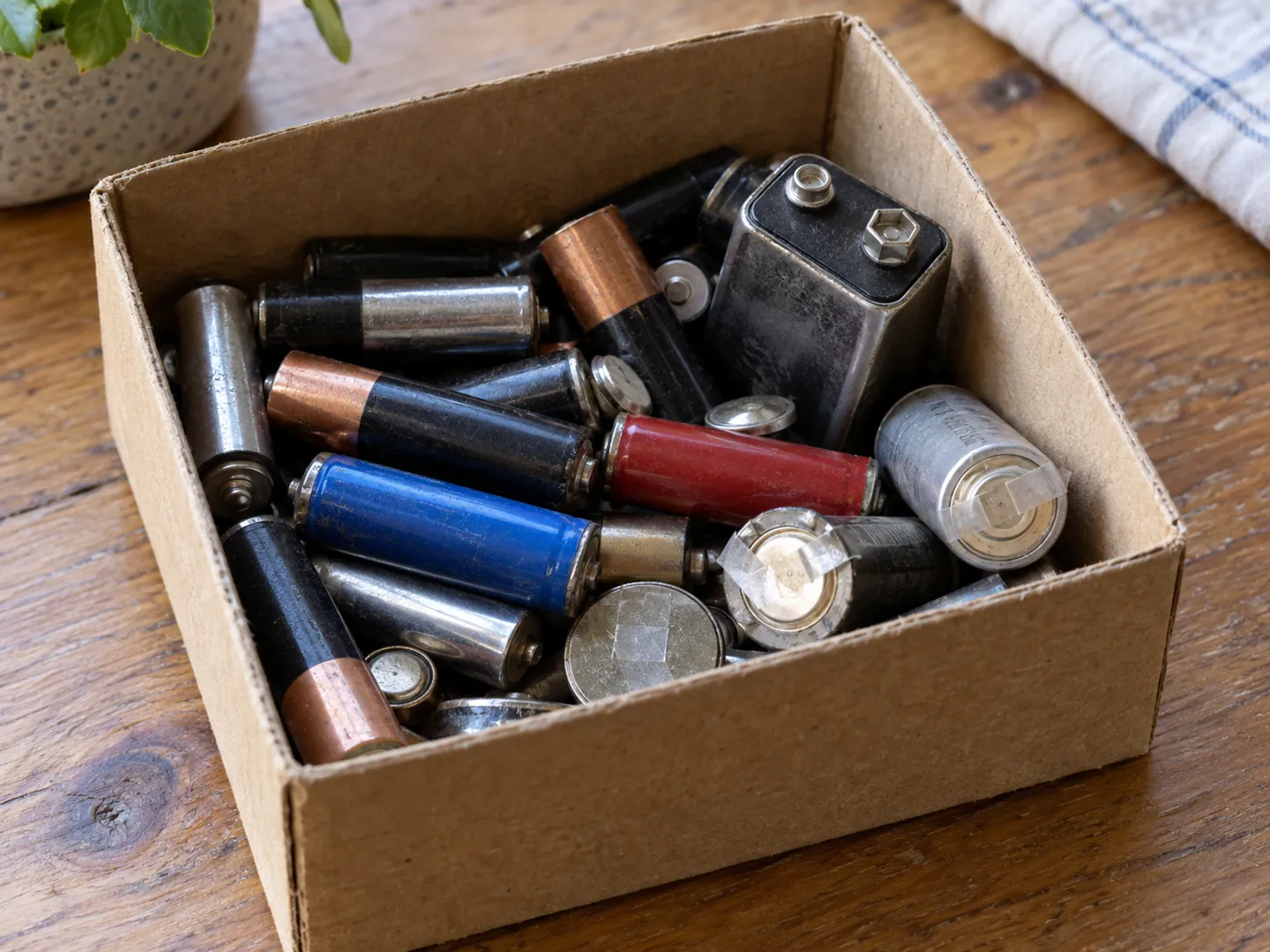
OPSS says waste batteries and electricals can leak toxic chemicals in landfill, while recycling plants can extract metals and other valuable resources for new products.
There is also a safety reason: lithium-ion batteries can catch fire if dumped in a rubbish bin, particularly if wet or damaged. Defra notes that electrical components and chemicals can pose a health and safety risk to the waste industry.
Questions
No. Batteries and electrical products carry a crossed-out wheelie bin symbol, which means they should not go in household rubbish but to a collection point for recycling.
If you buy a new one, the retailer must take the old one back free on a like-for-like basis, online or in store. Large electrical shops must also take small items under 25 cm free without a purchase.
At supermarkets and other shops selling over 32 kg of batteries a year, which should have a collection point. Tape lithium battery terminals first.
If the battery cannot be removed, as in calculators and e-cigarettes, treat the whole item as an electrical product and take it to an electrical collection point.
OPSS says lithium-ion batteries can catch fire if dumped in a rubbish bin, particularly if they get wet or are damaged.
Sources
ABOUT THIS NAME
doodlegadget.com is part of the DoodleSale portfolio. It isn't in an auction right now, but you can ask about leasing it.